
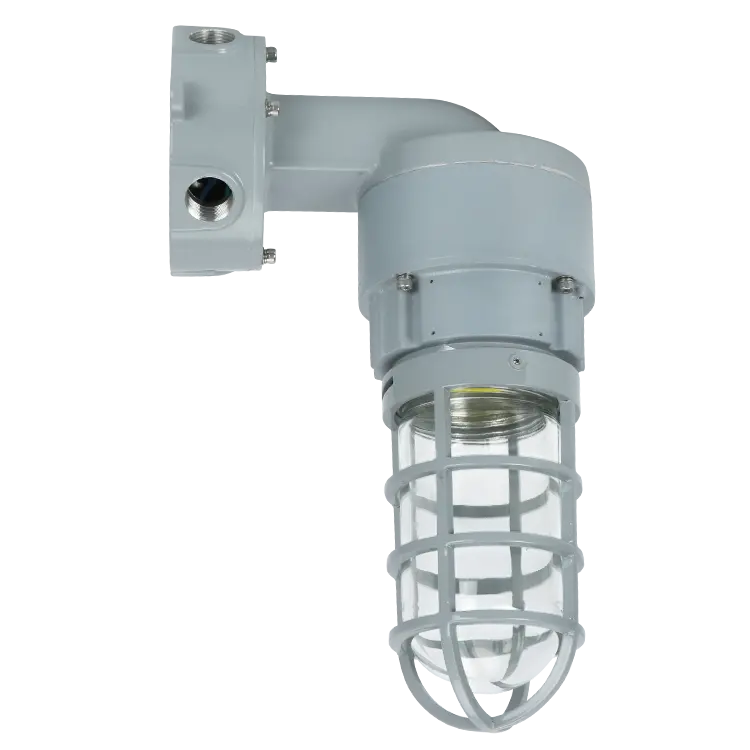
In industries where hazardous environments pose significant risks, choosing the right lighting solution is more than just a matter of illumination—it’s a critical safety decision. Explosion proof jelly jar lights are designed to withstand explosive atmospheres while maintaining longevity against corrosive forces. Understanding their design, corrosion resistance, certifications, and performance specs is key to selecting fixtures that ensure compliance, durability, and operational efficiency.
What Are Explosion Proof Jelly Jar Lights?
Explosion proof jelly jar lights are specialized lighting fixtures engineered to contain any internal explosions, preventing ignition of surrounding hazardous gases or dust. Their design includes a robust, transparent glass enclosure, often shaped like a jar, which houses the light source safely. The iconic 'jelly jar' form is accompanied by a protective metal cage that guards the glass from mechanical damage. These lights are essential in environments like chemical processing facilities, fuel storage tanks, and power plants, where combustible dust and flammable vapors are common. Beyond illumination, their role in safety compliance and minimizing fire hazards is indispensable. For example, the 27W LED explosion proof jelly jar light is specifically designed for such hazardous locations, combining safety with efficient lighting.
Why Corrosion Resistance is Crucial for Hazardous Location Lights
In harsh industrial settings, corrosion can rapidly degrade fixtures, compromising safety and performance. Corrosion resistance significantly prolongs the service life of explosion proof jelly jar lights, especially in chemically aggressive or marine environments where salt spray, acids, or metal treatment chemicals are prevalent. Materials like copper-free aluminum resist rust and chemical attack better than conventional metals, while powder-coated finishes add a resilient barrier. Enhanced corrosion resistance reduces maintenance intervals and costs, ensuring that safety-critical lighting remains reliable under constant exposure to moisture, chemicals, and abrasive contaminants.
Key Certifications and Safety Standards to Look For
When selecting explosion proof jelly jar lights, ensure they carry UL 844 certification for hazardous locations and UL 1598 for fixture safety. Class I Division certifications indicate suitability for environments with flammable gases or vapors. Marine certifications verify performance in corrosive saltwater conditions. Additionally, IP ratings (such as IP65 or IP66) confirm protection against water and dust ingress, while IK ratings (like IK08 or IK10) attest to impact resistance. Reliable warranty coverage offers assurance on product longevity and manufacturer confidence, critical for high-stakes industrial applications.
Durable Construction Features that Enhance Corrosion Resistance
Corrosion resistance starts with material choice. Many quality jelly jar lights use copper-free aluminum housings paired with stainless steel cages that resist rust in chemical and marine environments. Tempered glass lenses offer high durability and clear light output while tolerating thermal shocks. Impact resistance certifications like IK08 or IK10 reveal the fixture’s toughness against physical abuse typical in industrial sites. Powder coating and specialized finishes prevent base metal degradation by sealing the surface from environmental wear. Design aspects such as ventilation and heat dissipation also play roles in minimizing thermal stress and prolonging fixture life.
Mounting Options: Pendant, Surface, and Wall Mount Explained
The versatility of mounting methods allows explosion proof jelly jar lights to fit varied industrial needs. Pendant mounts are ideal for high ceilings or outdoor areas needing downward lighting, often seen in warehouses or open chemical processing plants. Surface mounts offer straightforward installation on flat ceilings or platforms, providing uniform illumination without structural complications. Wall mounts cater to targeted lighting needs in confined spaces or specific zones such as corridors or hazardous storage rooms, optimizing space and fixture placement for safety and visibility.
Performance Specifications to Consider Before Buying
Lumen output and color temperature influence the quality and clarity of illumination, critical for tasks demanding precision. Beam angles determine the spread and focus of the light, affecting the coverage area. Electrical specifications like wide voltage ranges (100-277V), power factor, and dimming capabilities add flexibility and efficiency. Lifespan expectations often reach 50,000 hours or more, backed by metrics like lumens per watt (lm/W) to gauge energy efficiency. Compatibility with wide temperature and humidity ranges ensures reliable operation in fluctuating environmental conditions. Models such as the 40W LED explosion proof jelly jar light offer robust output with wide voltage range compatibility for industrial use.
Common Applications for Explosion Proof Jelly Jar Lights
Industries such as chemical processing, power plants, marine operations, and metal treatment heavily rely on explosion proof jelly jar lights. They illuminate areas with combustible dust, fuel storage sites, and paint booths where ignition risk is high. Marine-grade corrosion resistance makes them suitable for offshore oil rigs and marine environments exposed to saltwater. Their durability and safety features also lend well to emergency and security lighting in hazardous zones, enhancing operational safety around the clock.
Advanced Features: Motion Sensors and Smart Controls
Integrating motion sensors in explosion proof jelly jar lights contributes to energy savings by activating lighting only when needed, supporting compliance with safety protocols. Modern fixtures may offer WiFi or Bluetooth capabilities for remote monitoring and control, improving convenience in chemical plants and power stations where access may be restricted. These smart controls enhance operational efficiency by automating lighting schedules, and many existing jelly jar lights feature retrofit options to upgrade older systems without complete replacement. For instance, the 30W LED explosion proof jelly jar light comes with advanced features like photocell compatibility and dimming.
Installation Guidelines for Safe and Effective Setup
Installing explosion proof jelly jar lights begins with selecting the proper mounting type matching the site requirements. Surface and wall mounts require secure attachment to flat surfaces, while pendant mounts often involve robust suspension hardware and conduit connections. Wiring must adhere to hazardous location electrical codes, using the correct conduit and sealing methods. Proper mounting height and orientation optimize illumination and avoid shadows in critical work areas. Professional installation is essential to ensure compliance with safety standards and certification mandates.
Maintenance and Longevity Tips for Corrosion-Resistant Jelly Jar Lights
Routine cleaning prevents corrosion buildup and preserves lens clarity, critical in dusty or chemically active environments. Regular inspection identifies early signs of wear, such as cage rust or glass clouding, especially in marine or metal treatment settings. Following manufacturer guidance on care maximizes the investment, extending the fixture’s longevity. Using original replacement parts maintains safety certification integrity, while warranty coverage offers peace of mind for repairs or component replacements.
Comparing Top Explosion Proof Jelly Jar Lights in 2026
| Model | Corrosion Resistance | Mounting Flexibility | Lumen Output | Certifications | Price Range | Warranty | Unique Features |
|---|---|---|---|---|---|---|---|
| Model A | Marine-grade powder coating, copper-free aluminum | Pendant, Surface, Wall | 3500 lm | UL 844, Class I Div 2, IP66, IK10 | $$$ | 5 years | Integrated motion sensor |
| Model B | Stainless steel cage, standard powder coat | Surface and Wall only | 3000 lm | UL 1598, Class I Div 1, IP65, IK08 | $$ | 3 years | Photocell compatible |
| Model C | Copper-free aluminum, UV resistant finish | Pendant and Surface | 4000 lm | UL 844, Marine certifications, IP66 | $$$$ | 7 years | Bluetooth control option |
Frequently Asked Questions About Corrosion Resistant Explosion Proof Jelly Jar Lights
Are these lights suitable for outdoor and marine environments? Yes, models with marine-grade corrosion resistance and appropriate certifications are designed to withstand harsh saltwater exposure and outdoor weather conditions.
What mounting options are best for high ceiling installations? Pendant mounts are ideal for high ceilings or open outdoor spaces, offering effective downward lighting.
How long do corrosion resistant jelly jar lights typically last? Lifespans generally range around 50,000 hours, depending on environmental factors and maintenance.
Can these fixtures be dimmed or controlled remotely? Many newer models support dimming and smart controls like WiFi or Bluetooth, allowing flexible operation.
What warranty and service options are available? Warranties vary from 3 to 7 years; it’s recommended to choose products backed by robust coverage and from manufacturers offering original replacement parts.
Optimizing Safety and Durability with the Right Explosion Proof Jelly Jar Light
Selecting an explosion proof jelly jar light with superior corrosion resistance and proper certifications ensures both compliance and operational longevity in hazardous environments. By considering construction materials, mounting options, performance specifications, and advanced features, industrial operators can make informed decisions that balance upfront costs with lasting safety and energy efficiency. Proper installation and proactive maintenance further enhance fixture reliability, securing dependable lighting in some of the toughest workplace conditions encountered.